

Warehouse and factory floors work harder than most assets on site. Forklifts scrub turning circles all day, pallet trucks batter joints, and process spillages attack the surface chemistry. Meanwhile, you still need safe walkways, clear line markings and a floor that cleans quickly between shifts. Because of that, concrete floor coatings have become a practical way to protect slabs and improve day-to-day performance.
When you specify the right industrial floor coating and install it professionally, you get a hard-wearing, chemically resistant surface that stands up to heavy traffic and machinery. Furthermore, you can add anti-slip texture, colour zoning and durable warehouse floor paint finishes that support compliance and productivity.
What a concrete floor coating does
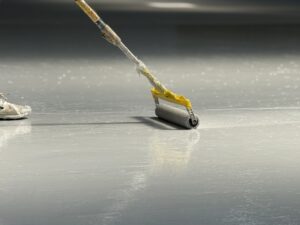
Concrete delivers strength, however its surface remains porous and vulnerable. Grit grinds into the top layer, liquids soak in, and repeated traffic can trigger dusting and micro spalling. A coating solves those problems by sealing and protecting the wearing surface.
In practice, most resin flooring specifications fall into two categories:
-
Thin film coatings (often epoxy or polyurethane) that seal the concrete and resist abrasion while keeping build height low.
-
Build systems (such as epoxy screeds or resin mortars) that add thickness for higher impact, heavier point loads and stronger chemical exposure.
Ultimately, the goal is not maximum thickness, it is the right performance in the right zones.
Why bare concrete struggles in industrial environments
Abrasion, dusting and tyre scrub
Forklifts and reach trucks drag grit across the slab, especially at junctions and racking aisles. Consequently, unsealed concrete starts to dust, which spreads contamination into stock and plant. Tyre scrub also polishes the surface, so grip can drop even when the floor looks clean.
Impact, joints and point loading
Dropped pallets, racking legs and pallet truck wheels concentrate force into small areas. Although a slab can carry the overall load, edges and joints often chip first. Consequently, you see trip hazards, vibration for vehicles, and progressive joint breakdown.
Chemicals, staining and moisture
Oils, coolants, battery electrolyte and cleaning agents can stain or degrade bare concrete because the surface absorbs them. Meanwhile, moisture rising through the slab can create pressure under a coating. For this reason, competent contractors test moisture and select primers and systems that suit the building, not just the traffic.
Benefits that matter to decision-makers
Hard-wearing, chemically resistant performance
A properly installed epoxy floor coating can resist abrasion and many common industrial chemicals, so the floor holds up under routine forklift traffic. Additionally, high-build resin systems can protect high-wear zones such as loading bays, battery charging areas and production lines. That durability reduces patch repairs and helps you plan maintenance rather than firefight it.
Safer movement with anti-slip finishes and clear routes
Smooth concrete becomes slippery when it picks up water, oil or fine dust. Therefore, many specifications include an anti-slip floor coating by broadcasting graded aggregate into the resin. Similarly, line markings and colour zoning separate pedestrians from vehicles, which reduces conflict in busy yards and aisles.
Cleaner operations and better light
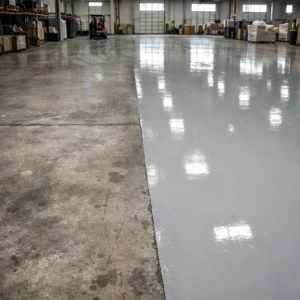
Sealed floors stop dust at source, so cleaning teams can maintain standards with scrubber dryers and routine detergents. At the same time, light-coloured coatings reflect more light than dark, contaminated concrete. In turn, you can improve visibility in picking zones and workstations without changing the lighting design.
Choosing the right industrial floor coating system
Epoxy floor paint and coatings
Epoxy remains the standard choice for many warehouses because it bonds strongly to prepared concrete and provides good abrasion resistance. Typically, installers apply epoxy as a thin film for general areas, then increase build in turning circles and loading zones. However, epoxy can chalk in direct sunlight, so external canopies and yards often need a different finish.
High-build epoxy screeds and resin mortars
Where impact and wear combine, a thicker system can outperform thin film coatings. For example, epoxy screeds protect busy traffic lanes, racking interfaces and dock areas, while also tolerating more aggressive cleaning. Equally, contractors can repair these systems locally, which helps you manage high wear zones without recoating the entire facility.
Polyurethane and hybrid topcoats
Polyurethane topcoats add flexibility and can improve UV stability compared with epoxy alone. For this reason, many specifications use epoxy primers and body coats, then finish with a polyurethane wearing course to balance toughness and long-term appearance.
Fast cure MMA for tight shutdowns
MMA systems cure quickly, so they suit projects where downtime drives the programme. Consequently, sites often return areas to service sooner than with conventional epoxies, even in cooler conditions. However, MMA demands strict ventilation and segregation, so contractors must plan the work carefully in live buildings.
Common specification mistakes to avoid
Industrial floor coatings rarely fail because a single product underperforms. More often, the project fails because the specification ignores how the area actually operates. Therefore, it helps to pressure test the proposal against a few common pitfalls.
-
Selecting a thin-film coating in high shear zones such as forklift turning circles and dock approaches.
-
Skipping moisture testing, then discovering blistering after installation.
-
Coating over oil saturation, curing agents or old sealers without fully removing them.
-
Adding aggressive anti-slip texture without considering how the cleaning team will maintain it.
-
Treating line marking as a separate paint job rather than part of the resin flooring system.
-
Reopening areas too early, which can imprint tyres and weaken the wearing surface.
If you address these points upfront, you will usually reduce remedial work and improve whole-life cost.
Floor preparation: the part you cannot shortcut
Survey, moisture testing and compatibility checks
Most coating failures start with the substrate, not the product. For that reason, a professional survey should confirm contamination, slab strength, joint condition and moisture behaviour. Contractors often use moisture tests and small trial areas, because those checks highlight hidden sealers, oil saturation or weak laitance.
Mechanical preparation that creates a reliable bond
Industrial coatings need a controlled surface profile. For this reason, contractors typically use shot blasting, diamond grinding or scarifying to remove the weak top layer and open the concrete. Cleaning alone rarely delivers that profile, and inconsistent preparation leads to weak adhesion and early wear.
Repairs, joints and detailing that protect edges
Cracks, spalls and failed joints will show through a coating if you ignore them. As a result, competent teams repair defects first, then detail drains, thresholds and upstands to prevent early breakdown. They also treat movement joints properly, because resin cannot bridge ongoing movement without cracking.
Installation planning for live warehouses and factories
Phasing, traffic management and permits
Most industrial sites cannot stop operations completely. In operational terms, successful projects split the floor into logical zones, keep emergency routes open, and manage vehicle and pedestrian segregation with barriers and clear signage. Meanwhile, contractors coordinate permits, isolations and cleaning schedules so the work fits the site’s risk controls.
Curing, return to service and quality checks
Cure time depends on resin chemistry, temperature and thickness. Contractors should also check substrate temperature and dew point, because condensation can undermine adhesion. For that reason, the contractor should define walk-on time, light-traffic time and full forklift loading time for each area. A disciplined handover prevents imprinting and early damage, and it protects the client’s investment from day one.
Compliance and standards to keep in view
Industrial floor coating work touches both building quality and workplace safety. For example, UK specifiers often reference the BS 8204 series for guidance on concrete bases, screeds and synthetic resin floorings. Similarly, contractors should manage chemicals under COSHH, and they should operate equipment and dust control under a safe system of work that matches site rules.
Slip risk also deserves specific attention. For this reason, a good specification states the intended use, the contamination risks and the cleaning method, then selects texture accordingly. That approach supports compliance because it links performance to real operating conditions rather than generic product claims.
Maintenance that protects lifecycle value
A coated floor will last longer when the site maintains it consistently. Day to day, you should remove grit promptly, because it acts like sandpaper under tyres. Also, use compatible detergents and avoid overly aggressive pads that dull the surface.
If you inspect turning circles and dock edges routinely, you can patch small defects early, which prevents larger delamination later. You can also protect entrances with walk-off mats and routine degreasing, because contamination often starts at the doors. Finally, keep a rapid patch plan for chips caused by dropped loads.
People Also Ask: concrete and epoxy floor coating FAQs
How long do epoxy floor coatings last in a warehouse?
Lifespan depends on preparation, build and traffic intensity. However, a well specified epoxy system can perform for many years in general aisles when the site cleans and repairs damage promptly. In contrast, turning circles usually need higher build and periodic refresh coats.
Can you apply epoxy to damp concrete?
You should always test first, because moisture can cause blistering and debonding. If the slab shows elevated moisture, you may need a moisture tolerant primer or a different resin system. As a result, survey results should drive the specification.
What is the best industrial floor coating for forklift traffic?
Many sites use higher build epoxy coatings or epoxy screeds in forklift lanes and turning bays. Furthermore, a tougher topcoat can improve wear in the highest scrub zones. The right answer depends on tyre type, load, turning frequency and cleaning regime.
Do anti-slip resin floors become hard to clean?
They can, although texture selection usually solves the problem. For example, light to medium texture can improve grip while still allowing scrubber drying. Accordingly, you should specify slip resistance alongside cleaning method, not separately.
Will a coating improve lighting in work areas?
Yes, especially with light colours and a uniform finish. In turn, many facilities see improved visibility in aisles and around machinery, which supports safer movement and more consistent quality checks.
A practical approach from Inter-City Contractors
Inter-City Contractors delivers concrete and epoxy floor painting as a planned engineering task, not a cosmetic upgrade. The team starts with survey and testing, then it matches the coating system to traffic, chemicals and downtime constraints. At the same time, it prioritises mechanical preparation and robust detailing, because those steps protect adhesion and edge durability.
Ultimately, decision-makers get the best value when they treat the floor as a working asset. When you combine the right specification with disciplined preparation and a controlled installation programme, you extend service life, improve safety and reduce disruption across the site.